
#Study || Inheritance Without Hassle: Understanding Probate & Share Transmission in Nigeria
Inheritance Without Hassle: Understanding Probate & Share Transmission in Nigeria
Inheritance in Nigeria often becomes complicated when families attempt to access a deceased loved one’s financial assets — especially shares, investments, and capital‑market holdings. Many beneficiaries don’t know where to begin, which documents are required, or how long the process should take. This confusion leads to delays, disputes, and in some cases, complete loss of value.
This blog breaks down probate, share transmission, and why proper estate planning is essential for anyone who owns financial assets in the Nigerian capital market.
What Is Probate in Nigeria?
Probate is the legal process that validates a deceased person’s Will and authorizes the executors to manage and distribute the estate. When there is no Will, the court issues Letters of Administration to the next‑of‑kin.
Probate ensures:
- The right beneficiaries receive the right assets
- The estate is protected from fraud
- Registrars, banks, and capital‑market operators can legally release funds or shares
Without probate, most institutions cannot transfer ownership of shares or investments.
Understanding Share Transmission
Share transmission is the official process of transferring a deceased shareholder’s units to the rightful beneficiary. In Nigeria, this process is handled by registrars, who maintain shareholder records for listed companies.
To complete share transmission, beneficiaries typically need:
- Death certificate
- Probate or Letters of Administration
- Valid means of identification
- Bank details
- Passport photograph
- Completed transmission forms
Once approved, the registrar updates the shareholder register and issues new statements in the beneficiary’s name.
Why Probate Matters for Investors and Families
Many Nigerians invest in stocks, mutual funds, and other capital‑market instruments — but few prepare for what happens after they’re gone. Probate protects both the estate and the beneficiaries by ensuring:
- Smooth access to financial assets
- Avoidance of family disputes
- Legal protection against impersonation or fraud
- Proper documentation for future transactions
For families, probate is not just a legal requirement — it is the gateway to unlocking value that the deceased worked hard to build.
Common Challenges Families Face
Despite its importance, probate and share transmission often come with hurdles:
- Lack of awareness about required documents
- Delays in obtaining probate
- Difficulty locating share certificates or CSCS statements
- Unclear guidance from multiple institutions
- Emotional stress during an already difficult period
These challenges highlight the need for accessible education and professional support.
Why Probate Clinics Are Becoming Essential
Probate clinics provide a safe, structured environment where families can learn:
- How probate works in Nigeria
- How to process share transmission
- What documents are required
- How to avoid delays
- How registrars and regulators support beneficiaries
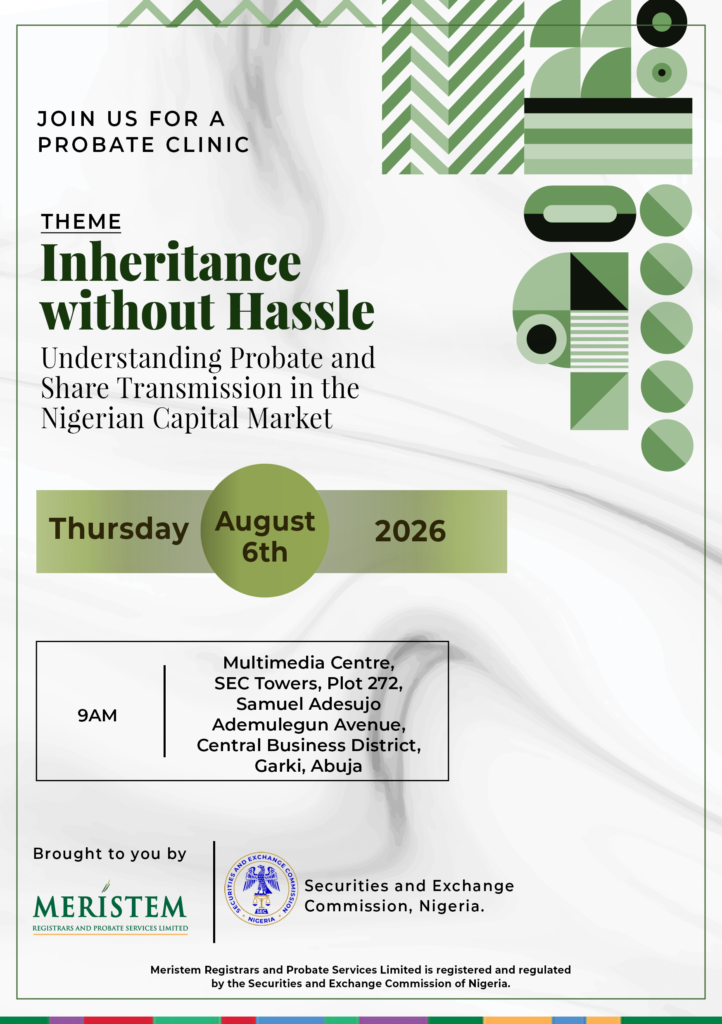
Events like the Probate Clinic themed “Inheritance Without Hassle” help demystify the process and empower Nigerians to handle estate matters confidently.
Estate Planning: The Best Way to Avoid Probate Stress
While probate is necessary, proper estate planning can make the process faster and easier. Consider:
- Writing a valid Will
- Keeping investment documents organized
- Informing trusted family members about your assets
- Using professional probate services
- Updating shareholder information regularly
Estate planning is not only for the wealthy — it is for anyone who wants their family to inherit without hassle.
Final Thoughts
Probate and share transmission don’t have to be overwhelming. With the right knowledge and support, families can navigate the process smoothly and preserve the value of their loved one’s investments. Educational initiatives and professional guidance continue to play a crucial role in simplifying inheritance in the Nigerian capital market.